Blog


Phone Number
(843) 345-2415
Send Your Mail
darryl@thepoolcarepros.com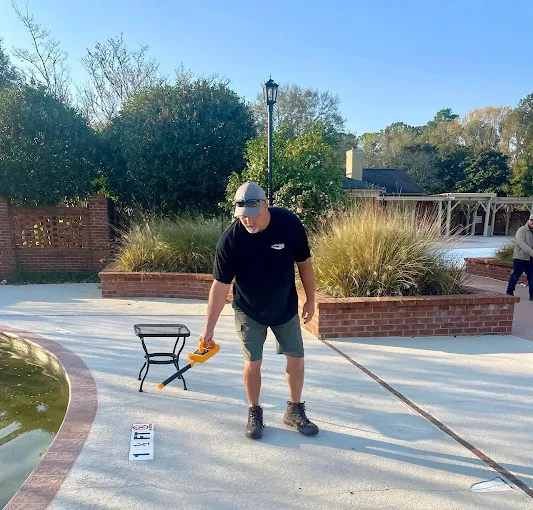
May 13, 2026
If your pool is losing water faster than evaporation can explain, there is a good chance you have a leak somewhere. The tricky part is that pool leaks hide in many different places, and the water rarely shows up right where the problem is.
Catching a leak early matters. Left alone, even a small leak can undermine your pool shell, erode the surrounding soil, and damage your hardscape over time. Here are the eight most common sources, including the ones that show up most often in Charleston's coastal climate.
Plaster surfaces become porous as they age, especially when water chemistry runs off balance. Fiberglass pools can experience delamination, where the outer gel coat separates from the structural layer and creates hidden pathways for water to escape. Charleston's long swim season and temperature swings accelerate surface wear on pools that go without regular chemical monitoring.
This is the most common source of pool leaks that homeowners never see coming. Pool plumbing runs underground beneath the deck, and every fitting and joint is a potential failure point. In the Charleston area, clay-heavy Lowcountry soil expands when wet and contracts when dry. That constant movement stresses pipe joints year-round. What starts as a hairline crack in a fitting can slowly widen until you are losing significant water weekly with no visible sign above ground.
Detecting underground plumbing leaks requires pressure testing and, in some cases, specialized acoustic equipment. A visual inspection alone will not catch it.
Skimmers and return fittings are installed where plastic meets concrete, and those two materials expand and contract at different rates. Over time, small gaps form at the interface and water begins to escape. This is one of the most common leak sites on pools more than eight to ten years old.
A quick test: run the pump normally, note the water level, then turn the pump off overnight and check again. If the loss slows when the pump is off, the problem is likely in the plumbing or fittings under pressure.
Vinyl liner leaks come from punctures, bead separation where the liner pulls away from its track, or UV degradation. Charleston averages over 215 sunny days per year, which breaks down liner material faster than in most other markets. Chemical imbalance speeds things up further. Liners in this area that are more than ten years old should be inspected for integrity as part of any routine pool diagnostic.
Underwater light fixtures are one of the most overlooked leak sites. If the conduit seal or the gasket around the fixture fails, water flows directly through the pool wall. A common sign is that the water level stabilizes right at or just below the light fitting height. These leaks are fully repairable, and an underwater repair technician can often address them without draining the pool.
Built-in steps and coping are frequent leak sites that get dismissed as cosmetic issues. Steps are hollow and the bond between the step and pool wall can crack under physical stress. Coping grout and mortar joints crack over time, especially in the Lowcountry where soil movement is ongoing. When water infiltrates a coping joint, it works down into the bond beam and weakens the structural edge of the pool. That is a much bigger repair than re-grouting a joint early.
Not every pool leak is in the pool itself. O-ring seals, union fittings, pump lid gaskets, and valve bodies all degrade over time. In Charleston's near-year-round operating environment, these components wear faster than in markets with shorter swim seasons. Equipment pad leaks usually show up as dripping or pooling near the pump and filter. Small weeps can go unnoticed for a long time when equipment is tucked behind fencing or landscaping.
When the water table rises during heavy rain seasons, groundwater pushes against the outside of the pool shell. In Charleston, where water tables in many neighborhoods are relatively shallow, this is a real and recurring issue. Over time, consistent hydrostatic pressure causes subtle structural shifts that open cracks, separate fittings, and damage underground plumbing. This type of leak requires a thorough professional evaluation, not just a surface repair.
Every day a leak goes unaddressed, the damage compounds. Escaping water saturates the surrounding soil, which shifts and puts more stress on adjacent plumbing and the pool shell. You may notice sunken concrete around the pool, soft spots in the yard, or shifting pavers before you ever see the actual leak. By the time those signs appear, the damage often goes well beyond a simple repair.
In a coastal market like Charleston, where heavy rainfall, high water tables, and clay soil already stress pool structures throughout the year, an undetected leak accelerates that damage significantly. Catching it early is always cheaper than dealing with the consequences of waiting.
The PoolCare Pros specialize in professional pool leak detection throughout Charleston and the surrounding area. We use pressure testing, acoustic equipment, and hands-on diagnostic experience to locate leaks accurately, whether they are underground, fully submerged, or hidden inside equipment.
With over 15 years of experience in this market, we understand how Charleston's soil, climate, and pool conditions contribute to each of these leak sources. If your pool is losing water and you are not sure why, call us today at (843) 345-2415 or contact us online.
The sooner a leak is found, the less it costs to fix.
Our Blog

© 2025 The PoolCare Pros. All Rights Reserved | By Wayo Media