Blog


Phone Number
(843) 345-2415
Send Your Mail
darryl@thepoolcarepros.com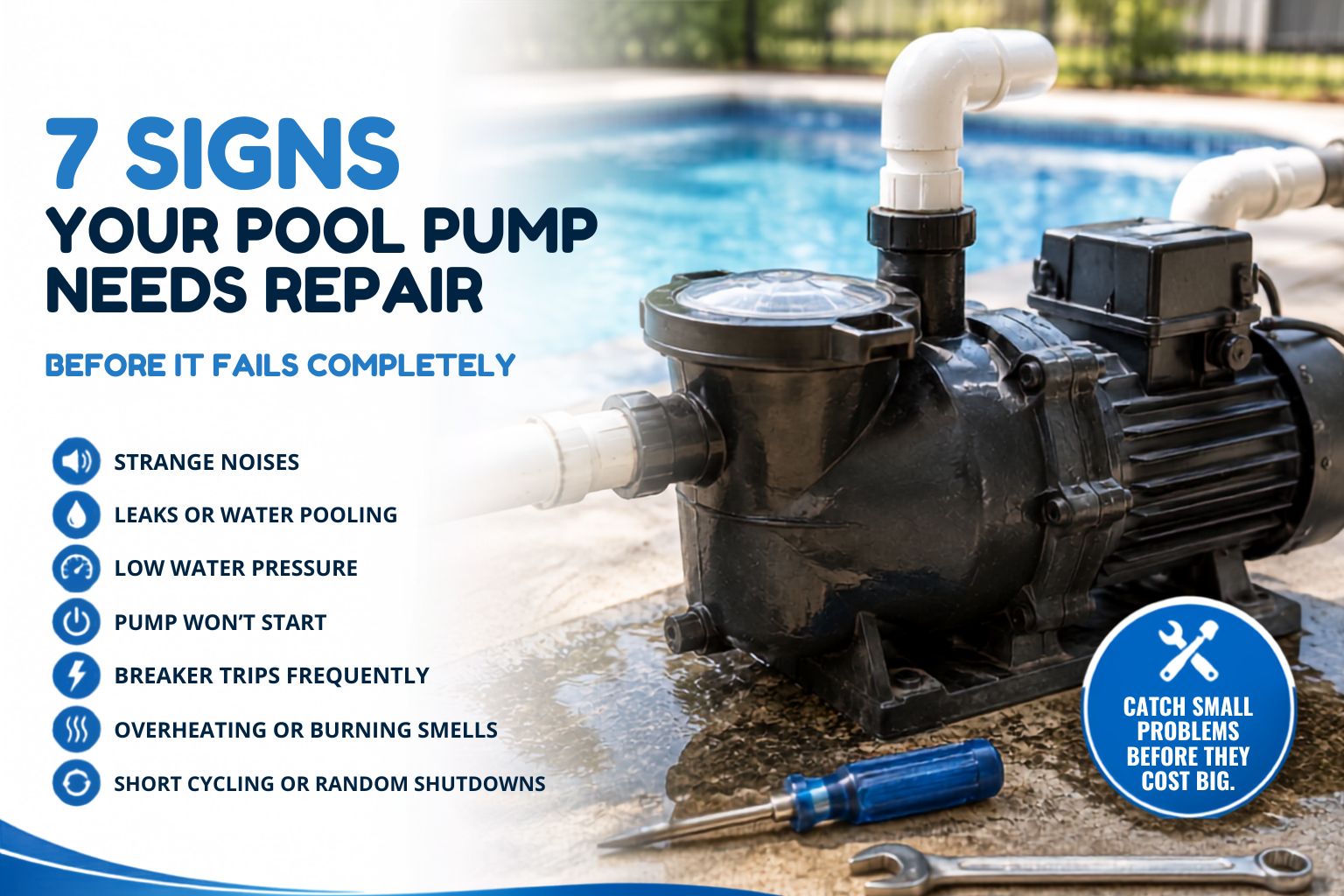
July 7, 2026
Your pool pump rarely gets a second thought until something feels off. Maybe it sounds different. Maybe the water looks cloudy no matter how long it runs. Maybe your energy bill jumped for no obvious reason. These small clues matter more than most homeowners realize, and catching them early is the difference between a simple, affordable repair and a full equipment replacement that could have been avoided with a little attention.
Think of your pump like the heart of your backyard oasis. It pushes water through the filter, the heater, and back into the pool, keeping everything circulating and balanced. When the pool pump motor weakens or falters, the whole system suffers, and small issues can snowball fast if a proper pool equipment service isn't scheduled soon.
A pump that's struggling doesn't just mean weaker water flow. It means your filter works harder to keep water clear, your heater cycles inefficiently, and chemicals distribute unevenly throughout the pool. Left unaddressed, that ripple effect touches nearly every other system tied to your backyard investment.
Not every pump problem is obvious right away. Some show up as sound, some as water clarity, and some as your electric bill creeping upward. Here are the clearest signals that it's time to repair your swimming pool pump before a minor issue becomes a costly one.
1. Strange Grinding or Screeching Noises
A healthy pump hums quietly in the background. If yours suddenly grinds, screeches, or rattles, worn bearings are usually the culprit. Left alone, this friction damages the motor shaft permanently, turning an affordable fix into a full replacement within just a few weeks of continuous strain.
2. Visible Leaks Around the Pump Housing
Puddles forming near the pump base almost always point to a failing seal or a cracked housing. Even a small drip wastes gallons of water weekly and invites corrosion into electrical components nearby. This is one of the fastest ways minor wear becomes an expensive safety hazard.
3. Noticeably Low Water Pressure
If your water returns feel weaker than usual, or your skimmer barely pulls debris, your pump may be struggling internally. Clogged impellers, air leaks, or a tired motor can all cause this drop. Low pressure also strains your filter and heater, shortening their lifespan considerably too.
4. The Pump Won't Start at All
A pump that stays silent when switched on could mean a burned out capacitor, a seized motor, or a deeper wiring fault. This is not a "jiggle the switch" situation. It's a clear signal that specialized diagnostics are needed before anyone attempts to force it back to life.
5. Frequent Electrical Trips or Breaker Shutoffs
If your breaker trips every time the pump kicks on, take that seriously. It usually means the motor is drawing excessive current, often from internal shorts or moisture intrusion. Repeated tripping isn't a nuisance to reset around; it's your electrical system warning you of real danger.
6. Overheating, Burning Smells, or Discoloration
A burning odor near your equipment pad, or scorched marks on the motor casing, means components are overheating. This can stem from failing bearings, blocked airflow, or electrical faults. Ignoring this sign risks a complete motor burnout, and in rarer cases, a genuine fire hazard nearby.
7. Short Cycling or Random Shutoffs
If your pump starts, runs briefly, then shuts off on its own repeatedly, something deeper is wrong. This "short cycling" pattern often points to thermal overload protection kicking in in response to strain. It's the equipment's built in cry for help, and it deserves prompt attention.
Pool equipment sits at a dangerous intersection: electricity and water, together, under load. It's tempting to search a video tutorial and grab a wrench, but pump motors involve wiring, capacitors, and bonding systems that are unforgiving of mistakes. One wrong move can mean serious injury.
Capacitors, in particular, can hold an electrical charge long after the power is switched off. Touching one without proper discharge tools has hurt experienced technicians, let alone weekend DIYers. Attempting to repair swimming pool pump wiring without training isn't just risky for your equipment; it's risky for you.
There's also the licensing angle. Electrical work tied to pool equipment typically requires adherence to local and national codes, including proper bonding and grounding. A poorly wired repair might function for a while, then fail catastrophically, sometimes voiding your homeowner's insurance in the process.
And then there's cost. A misdiagnosed issue often leads homeowners to replace parts that were never broken, while the actual fault goes untouched. What looks like a fifty dollar fix online can spiral into hundreds of wasted dollars, plus the original problem still waiting to be solved.
This is exactly why mechanical pool repairs are best left to certified hands. Diagnosing a pump properly means testing amperage draw, checking capacitor health, inspecting seals, and confirming bonding integrity; all things that require calibrated tools and hands on training most homeowners simply don't have.
Bonding wires, in particular, are easy to overlook but critical to safety. They keep stray voltage from turning your pool deck into a hazard during a storm or a fault. Reconnecting a pump without restoring bonding correctly can leave your entire equipment pad quietly unsafe for months.
Not every failing pump needs a full replacement, and not every "quick fix" is actually worth doing. The right call usually depends on three factors: the pump's age, the extent of the damage, and how the repair cost compares to a brand new unit.
Age matters more than most homeowners expect. Pumps typically last eight to twelve years with proper care. If yours is nearing that range and showing multiple warning signs at once, a repair may only buy you a few more months before something else fails.
Extent of damage tells its own story. A single worn seal or a failed capacitor is usually a straightforward, affordable fix. A cracked motor housing, burned windings, or repeated electrical trips often signal deeper problems that make replacement the more sensible, cost effective path forward.
Cost comparison keeps decisions grounded. As a general guideline, if a repair estimate approaches half the cost of a new pump, replacement usually makes more financial sense long term. Our certified team always walks you through these numbers before any work begins.
We're a family owned company built specifically around technical expertise, not routine upkeep. We don't offer basic pool cleaning services; our entire focus is diagnostics, leak detection, mechanical repairs, structural repairs, and renovations. That specialization means every visit is handled by our certified team, not a generalist.
When you call us about a pump acting up, our experts don't guess. We bring calibrated diagnostic equipment to measure amperage draw, test capacitor output, and inspect wiring integrity before recommending anything. As Charleston pool experts, we've seen how quickly a small pump issue can escalate in our humid, salt heavy coastal climate.
Charleston's weather adds its own wrinkles to pool equipment longevity. Humidity accelerates corrosion, storm surges can flood equipment pads, and sandy coastal soil shifts foundations over time. Our familiarity with these local conditions means faster, more accurate diagnostics than a technician unfamiliar with the region would provide.
We also believe in transparency. Before any repair begins, our certified team walks you through exactly what's failing, why it's failing, and what your realistic options are; repair, rebuild, or replace. No upselling, no vague explanations, just clear information so you can make a confident decision for your home.
How long does a typical pool pump repair take? Most mechanical repairs are completed within a single visit once the issue is diagnosed. Parts availability can occasionally extend the timeline by a day or two, especially for older or less common motor models that require special ordering.
Can a failing pump raise my electric bill? Yes. A struggling motor often draws more current to compensate for worn bearings or internal resistance. Homeowners are frequently surprised to learn that a noisy or overheating pump has been quietly inflating their energy costs for weeks before symptoms became obvious.
Is it ever safe to reset a tripped breaker myself? Resetting it once to check isn't unreasonable, but if it trips again immediately, stop. Repeated tripping signals a genuine electrical fault, and continuing to reset it repeatedly risks damaging your panel or creating a more serious hazard near water.
Do you only work on pumps, or other pool equipment too? Our certified team handles the full mechanical picture: pumps, motors, filters, heaters, and automation systems. We also specialize in leak detection, structural repairs, and renovations, though routine cleaning services fall outside our scope of specialized technical work.
A struggling pump rarely fixes itself, and waiting usually makes the eventual repair more expensive. If you've noticed strange noises, leaks, weak pressure, or electrical trips, it's time to repair your swimming pool pump before a manageable issue turns into a full system failure.
Skilled diagnostics protect both your wallet and your safety. Electrical components near water demand respect, calibrated tools, and real training, not guesswork from a weekend video. When your pump starts sending warning signs, trust a certified team that specializes in exactly this kind of mechanical work.
If your pump is acting up, don't wait for it to get worse. Reach out to The Poolcare Pros for a proper diagnostic visit. Our certified team serves Charleston, SC and the surrounding areas, bringing specialized tools and honest answers to every pool equipment service call we make.
Our Blog

© 2025 The PoolCare Pros. All Rights Reserved | By Wayo Media